Administrator
Hey! What's the difference between FENSA and Certass?

In a word - nothing!
Both are self-certification bodies used by contractors to ensure that their work is covered by Building Regulations. In essence, the contractor pays an annual membership fee, as well as a 'per job fee' and the customer receives Building Regulation certificates directly from the appropriate body.
"I've heard of FENSA but not Certass; why is that?"
What an excellent question! Well done, you!
FENSA was set up in 1992 and Certass in 2006. Because of this, FENSA have Top-Of-Mind-Awareness (TOMA) in the marketplace that consumers (that's you with a tie on) associate with windows. As FENSA has been around for longer, their name has become a 'Known Brand'; in the same way that 'Hoover' is a brand name that one associates with vacuum cleaners (this is know as a 'metonym') I hope you're enjoying the marketing speak and taking notes; there'll be questions afterwards.
"So what does FENSA stand for?"
FENSA stands for the 'FENestration Self Assessment' scheme.
"And Certass? What does that stand for?"
Certass stands for 'CERTification and ASSessment'. (I hope that Google doesn't flag the last up as a rude search term)
Is FENSA better than Certass or the other way around?
Pay attention; they're both the same. FENSA simply has greater 'Market Saturation' than Certass.
"How do I get my certificate?"
When you've paid your bill (in full, please); I register your work on the Certass website and they send you a certificate about 4-8 weeks later. You need to keep this safe as it belongs to the house, should you ever sell it. The other chap's solicitor will use the absence of the certificate as a reason to knock around £10,000 off the asking price of your house, because that is what solicitors do.
"£10,000?!?!?!?! You're having me on!"
Well, maybe a little. But you really do need to hang onto the certificate and not line the cat basket with it or anything.
"I've lost my certificate, what should I do?"
Oh, for goodness sake! I've just told you to store it safely! I don't know why I bother, I really don't; might as well be talking to a brick wall (NB: Brick walls are NOT covered by Certass. Or FENSA). Well, have another look for it.
"I still can't find it, have you got a spare copy?"
No, the window company doesn't get a copy. In fact, since the certificates are sent direct to the customer, the window company probably doesn't even know what they look like. You need to call Certass directly, give them your name and address and approximately when the windows were installed and they'll send you a duplicate.
"Is the duplicate free?"
No, it's £10. That'll teach you not to look after it. Anymore questions?
"No"
Right, you're free to go. Next time we'll be talking about customer warranties and why they're not transferable.
Keeping scumbags out
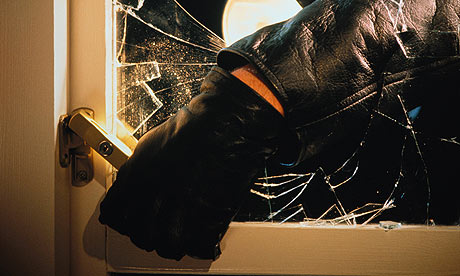
I'm not sure how funny I can be today, folks. A nice, older lady who lives on our road was broken into the other night and had her house ransacked. She was terribly shaken, as anyone would be. The human detritus who broke into her house came in by the back door, having smashed the glass and opened the door (with the key she had left in the lock). She lost some jewellery amongst other things; but presumably the psychological damage caused by being broken into will be more of a burden than the loss of a few bits and pieces (which are, after all, only stuff).
Unfortunately, if someone wants to get into your home, they will. The thing to do is reduce the reasons they might have for doing so - such as not leaving nice stuff lying around that can be seen outside (our lady always leaves her curtains open). The more difficult it is to get into someone's house, the less likely they are to be burgled, so lock your back gate, if you have one (she left hers unlocked). Get a burglar alarm, preferably with two sets of siren boxes, not one. Each set has a live box and a dummy box. With one set, if a burglar deactivates a live box, you've had it. But if you have two sets (and thus two live and two dummies) then when the miserable waste of DNA tampers with a live box, the other siren is activated. The burglar now has to deal with a loud alarm (though will sadly not be electrocuted, as this is presently - and unnaccountably - illegal in the UK.
- So don't leave windows open (if someone comes in through one and pinches your iPad, your insurance won't cover you since they haven't 'broken in')
- Don't leave keys in doors or windows, keep them out of sight, but to hand
- Don't leave nice stuff on display and so give people a reason to want to break in
- If you have a wood door, get a Chubb-style lock installed (so you have more than one locking point)
- Lock your back gate and walk round to the front of the house - think of it as your exercise for the day
- Look out for your neighbours and hopefully they'll do the same for you
So, how do I make this pertinent to what we do at Regent, without at the same time coming across as being hopelessly grasping and profiteering? If you do have a double-glazed door, think about replacing the glass unit with one that has laminate glass on the outside. Laminate glass is what you have in your car windscreen - two pieces of glass with a clear layer of plastic in between. If someone does try to smash the glass, it will split, but still be held in place by the plastic layer. This makes it much more difficult to break into and robs the burglar of the speed he needs to break into your home.
Keep warm, keep safe and keep your eyes open!
previous blog: "Why are my windows wet on the inside?"
next blog: "Hey! What's the difference between FENSA and Certass?"
Hey! My windows are wet on the inside - what's going on?!

Why are my windows wet on the inside?
Yup! We get this one a lot!
Modern windows are very good at keeping the warm in; in fact they are so good that they keep other things in as well, such as moisture and odours (yuk!). For a home to be healthy it has to breathe; relative humidity needs to be around the 45% mark to be comfortable; below 30% is too dry and above 60% is too damp. People create moisture – we constantly breathe out warm, damp air. Cooking, bathing, showering and washing also create a lot of moisture and this has to go somewhere. Even the best double glazing will always cool quicker than the surrounding walls and this is why you get condensation on the window panes. Look at your bedroom window after a night’s sleep – all that wet was you puffing away. Well done Mr Soggy. Now look in an empty bedroom – there should be a lot less there.
In the 70’s we were told to block up all the nooks and crannies in our homes, what with the energy prices going up and this has stayed in the national psyche. Shut that door! Close the ruddy window! Do you think I’m made of money etcetcetc. All this was very laudable at the time, but in the 1970's, only 5 people had double-glazing in the whole of the UK. OK, 6 people. Since then and despite our best efforts to the contrary, modern building practices have crept into the UK and, for the most part, our homes are a lot better built than they used to be. Double-glazing is now compulsory on all new-builds. All this is super and keeping us warm and snug, but what with all the labour-saving devices we have nowadays, such as washing-machines, tumble dryers, dishwashers; as well as the advent of cooking done for pleasure, as opposed to penance (rice-cooker, anyone?!) we're making a lot more moisture than we used to. And if the house isn't properly ventilated, the wet can't go anywhere and is going to stay indoors with us. Damp socks, anyone?
Trickle vents on windows help keep air circulating in a home, without creating a draught, but don’t expect them to extract all the moisture from the air if you run an unvented tumble dryer indoors (you know who you are!). One cycle in a tumble dryer will output around 5 litres (about 9 pints) of water into the air. Between that and microwaving your coffee to keep it hot, before you know it, you've got mold forming on the corners of your windows.
I think you've probably got the message by now; I could go on (and, according to my colleagues, frequently do) but I'll leave you in peace now. If you're keen, we've a nice, informative article on ventilation here. Now go and turn off that tumble dryer in your spare room (you know who you are!)
Do I go for PVCu or Aluminium windows?
Do I go for PVCu or aluminium windows?
Good question, thanks for asking. There are a lot of home makeover programmes on at the moment and here at Regent we are getting more and more enquiries for aluminium windows because of them. Anyone would have thought that Kevin McCloud and Kirstie Allsopp are in the pay of The International Consortium for Aluminium Bigwigs and Oligarchs*.
Aluminium offers slimmer lines and a sharp, design-led look that seems to be very much in vogue at present. Modern aluminium is thermally broken and powder coated and is streets ahead of the dull silver, condensation-generating horrors of yesterday. Because of this, poor old PVCu is getting a bit of a beating and seems to have fallen out of favour.
However, given the choice of PVCu or aluminium windows, I’d go for PVCu every time.
The stuff we use – Liniar, by HL Plastics is one of the best profiles you can buy. It is made from virgin PVCu with high levels of titanium, meaning it will stay white forever, unlike a lot of cheaper PVC’s. It has four sections inside, meaning that it is A) much better at keep the warm in and B) is extremely sturdy. It’s also lead-free (tick in the ‘Green’ box).
PVC is also a much warmer material. The aluminium we use is good, but you can still only get a ‘u’ value of 1.6 (which is very good) and you need to use Argon gas in the units. With PVC, we stroll in at around 1.3u; which is excellent.
There are polyamide thermal breaks in aluminium nowadays, but despite these, aluminium is still a material that is cold to the touch. As such, and with the right conditions, you can still get condensation forming. With PVC, which is a warmer material, this is much less likely.
The Liniar profile we use has a nice sculptured finish (called ‘Ovolo’) which I personally find more attractive than the rather commercial ‘flat’ look of aluminium profile – if I wanted this look I’d move to a flat above a chip shop.
The real clincher, though, is the price. PVCu is between 40-70% cheaper than aluminium, so I can spend more money on downloading music from iTunes and less on the wonderfully efficient but not very exciting windows in my house.
* Don't laugh, this may actually exist. If I turn up with lead boots on at the bottom of the River Severn then we'll know they're touchy too. And reading this blog.
previous blog: Windows are like burgers
next blog: "Hey! My windows are wet on the inside! What's going on!"
Windows are like burgers....

Windows are like burgers.....
I’ll admit it; it’s quite difficult to get excited about windows. Windows are fairly functional things. They keep the weather and burglars outside and they give you something you can watch the neighbours through.
This, plus the fact that double-glazing salespeople are about as popular as Gary Glitter in a kindergarten make it tricky to enthuse folks as to why they should choose ours over ABC Windows* or Sashes’R’Us*. I’ll try anyway. It’s my job.
There are burgers and burgers. There’s McDonalds burgers and GBK burgers.
McDonalds are fine. They serve a purpose and fill a hungry tummy. They’re cheap and have no pretensions. However, GBK burgers are made with the best ground chuck steak; sauces are made fresh every day and the whole experience is a little more enlightened than the one you get under the Golden Arches.
Our windows look the same as the next guys, but it is the differences inside and in their fabrication that set them apart from the others. The profile we use is one of the Top Three in the UK. It is lead-free, has four internal chambers (for rigidity and heat retension) and won’t fade. We buy our glass from named European brands, not cheap Eastern imports (which often arrive with blemishes and ‘ripple’ effects in them). We also use a Reverse Osmosis system for cleaning our glass, rather than a simple charcoal filter. The hot-melt we use is £20 a pack, instead of £8 a pack. You can’t see the difference (and neither can we!) but the £20 hot-melt won’t shrink and split over time, the £8 one tends to. I could go on, but you’re better off popping into our factory to see for yourself.
Unlike many other window companies, we don’t shop around for the cheapest supplier of windows and never know what quality we’re getting from one day to the next. We make our own windows from scratch, using the same materials; they’re made by the same guys who are paid a wage, not paid by the window.
We’re also happy to guarantee our windows, and since we’ve been trading since 1994, hope to be around to honour that guarantee. The guy who fitted your cheap windows is probably long gone and will be less interested in popping back to repair or adjust them. How do we know this? Because half of the call-outs we get are to fix work done by others, who are generally no longer trading.
We know we’re not the cheapest and are quite comfortable with that. If you buy cheap, you get cheap. We charge a fair rate for high quality windows and we think it is worth spending that little bit extra to get the job done properly. Our showroom is regularly visited by people who have learned this the hard way, just because they went for the cheapest quote!
Regent Windows – proudly relishing the difference!
*These are made-up names, by the way. Although I wouldn't be surprised if you can find them on Google - there are only so many things to call a window company.
No subcontractors and no cloning

I use a lot of email templates to answer commonly recurring questions from potential customers. These range from the informative:
“Your STANDARD quote, BULLET POINT NOTES, LAMINATE GLASS OPTION, STREET ADDRESS” or “Your ITEMISED QUOTE, STREET ADDRESS, LAMINATE OPTION”
To the official:
“Your e-Contract, please READ and REPLY to CONFIRM the details, thank you”
As well as the sniffy:
“Your quote request, WHERE YOU HAVE FAILED TO GIVE ANY DETAIL AND NO PHONE NUMBER”
Not to mention the table-thumping:
“Your SLIGHTLY RANTY EMAIL about how PVCu is EVERY BIT AS GOOD AS WOOD”
And once in a blue moon, I’ll bring this chap out of the bag:
“What the HELL is going on and WHY IS NOONE RETURNING MY CALLS!?”
In fact, I’ve only used this last one once. But being a wee bit OCD I thought I’d keep it should it be required ever again. Email correspondence aside, we do get quite a few phone calls when we are busy demanding updates on fabrication, ETA’s for delivery or installation and the dreaded: ‘I’ve changed my mind about the colour’.
Put quite simply, we’re very good at what we do. In fact, we’ve been known (drum roll, please), to turn away business. Yes. Turn it away. In a recession, if you please.
This is not because we’re snotty, quite the opposite, it is because if we take on too much, the whole thing stands to go feet up. We have a given number of staff and can manage a great deal. However, even the best juggler will find there is a limit to the number of balls he can juggle, before dropping the lot.
And we REALLY don’t want to drop the lot.
The only way around this; and one that many companies adopt, is to take on extra staff when it is busy and to let them go when it is quiet. Either that or they subcontract the extra work out. We don’t like to do this. Once core skills like fabrication or fitting are given to people outside the Magic Circle of Trust, you lose control of quality. It is a tempting short-term fix that can have long-term repercussions. You simply end up with a SHEDLOAD of Service Calls and angryface customers.
So we like to do everything ourselves, which means, with cheap and efficient cloning technology currently unavailable, we can only do a limited number of things at once.
So please bear with us and send Dave a text instead of leaving a message.
Thank you
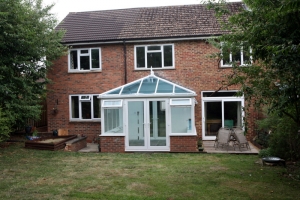
Guide to buying a conservatory - Part Five
Download a Conservatory Checklist
To continue with the original question, ‘how much will this all cost?’; we can now look at options that have the greatest cost variances.
- An aluminium conservatory frame will cost roughly twice what a PVCu conservatory frame will. Same goes for the roof frame.
- Polycarbonate roofs are cheaper than glass roofs
- There are different types of glass and different types of polycarbonate, with different properties and different pricetags
- Under-floor heating is nice and cosy; but is WAY MORE expensive than plumbing a new radiator into your existing heating system (and if it goes wrong, you’ll need to dig the floor tiles up to fix it)
- Plastering the inside walls is not vital to the conservatory structure (although it may be more aesthetically pleasing), so don’t automatically assume you need to do it. Might you prefer to see the exposed brick?
- Will you actually need a lighting circuit? Many people use floor-stander lamps to light their conservatories instead.
How to keep costs down
- Try to get a ‘certificate for the lawful proposed use of the development’ from the Planning Department, rather than full Planning Permission (unless advised otherwise). The certificate is cheaper.
- Do your own Planning Permission; all you need is A3 grid paper, a scale ruler, a pencil, time and patience
- Lay your own tiles or laminate floor (if you’re feeling brave)
- Don’t buy ANY new furniture till the conservatory is finished. Try re-distributing the furniture you already have. This not only saves money, but also frees up valuable space in other areas of the house (e.g: a seldom-used dining table)
- Don’t steam into signing up for a conservatory with all the options; take time to reflect on what you want, what you would like, what you need and what you can afford. Unless of course, money is no object, in which case my number is 07966 556 253!
The bottom line: Research the companies you want to do the work. Talk to friends and neighbours for word of mouth recommendations. Beware of ‘special offers’, they are usually nothing more than sales techniques. If you buy cheap, you get cheap!
Read enough already and want a quote? CLICK HERE.
Guide to buying a conservatory - Part Four
Download a Conservatory Checklist
How much will all this cost? (Beware false economies!)
There are too many variables involved to give a definitive, one-size-fits-all answer to this question; however I’ll attempt to answer it in a different way.
The cost of the building works (i.e: digging the hole for the base, the base itself, dwarf/full size walls, skips, drainage etc) will be at least 50% (and perhaps as much as 75% if you have a lot of groundwork doing) of the final bill. If you have a friend or relative or tame builder who will do this work for you, it will certainly be cheaper than if you get it done through the conservatory people. HOWEVER, this comes with two very important points to remember:
- Any building work NOT done by the conservatory company will have to be signed off by the conservatory company’s own surveyor prior to them putting the frame and roof on top. Why? Because the conservatory company will be warranting their structure and will not want to do this if they consider the base on which it stands to be less than satisfactory. So don’t just grab the two nearest blokes holding shovels – they need to know what they are doing.
- If you use different contractors to do different bits of your conservatory you will be opening yourself up to potential hassle if any issues arise. For example, the chap who made the base will think it is a very fine base, possibly the finest base ever built in the history of bases. The chap who builds the frame will likewise believe his frame to be a King Amongst Frames. The girl who makes the glass sealed units to go into the frame will be very proud of her sealed units etc, etc, you get the idea. So, IF anything goes wrong, the likelihood of anyone stepping forward and saying ‘Yup, that was me, sorry, I built the frame wrong’, is very small indeed. What usually happens is that the sealed unit girl blames the frame guy and the frame guy blames the base chaps. Noone will want to ‘take the blame’ and in so doing, end up with the remedial work. And you’ll be project managing them, so good luck unravelling that one. With this is mind it is often worth paying extra to get the work done by one company. In that way, if anything goes wrong, you go back to them and they sort the problem out for you.
The bottom line: Before you plunge head first into managing your own project, ask yourself if you have the time, experience and patience to do this properly. Like many things, it is not as easy as it looks!
Read enough already and want a quote? CLICK HERE.
Guide to buying a conservatory - Part Three
Download a Conservatory Checklist
The salesperson is selling me a conservatory, how do I tell the difference between what I need from what he wants me to have?
That’s a very good question, I’m glad you asked it; well done, you. The best way to keep track of the various salespeople, their suggestions, promises etc is to work out a list of areas you need to discuss and ask the same questions to each rep. This does several things:
- You look organised and together, you’re no professional but you’re not a patsy either
- You don’t forget to ask key questions
- You don’t have to memorise the answers
- Everyone answers the same questions so the quotes come in on a level playing field
- The sales person is less likely to fib if you are writing down his every word
You will need the following things for a conservatory:
- A base for it to stand on, complete with a PVC membrane, 100mm polystyrene layer and at least 150 mm concrete on top of this; remember this has to hold the weight of the structure, so it is important
- Walls for the frame to sit on (also handy for an internal window-sill all the way around that you girls are so keen on putting candles, china cats and ethnic lanterns on, and their boyfriends to put their feet up onto, only to be told to take them off again by his girlfriend, to pick an example purely at random)
- Windows, opening and fixed
- Doors to and from the house and/or garden; French doors, single doors, bi-folding doors
- A roof, in either polycarbonate or glass (each of which there are varying choices), with possibly a roof vent or two (more on heat conduction, convection and radiation elsewhere)
- Guttering and possibly drains relocated or installed
You will probably want the following things in your new conservatory:
- Flooring laid (laminate or tiling), budget for materials and labour
- Heating (under-floor or radiators)
- Plastering on all or some walls, including the inside of the dwarf wall, if applicable
- Electrical points (for lamps, fan heaters, laptops, hoovers, foot spas etc)
- Lighting points and switches (unless you intend to use only lamps)
You might want the following things in your conservatory
- Electronic/climate controlled roof vents
- Decorative glazing
- Cane furniture
- Ceiling fans
- Blinds
Since I am such a NICE GUY, I have uploaded the conservatory checklist I created back when I was a customer of Regent Windows, and before I joined the company itself. You can find this HERE; it is in Microsoft Excel so you can add and remove your own sections as you see fit. You’re welcome.
The bottom line: Use people who have built conservatories before; make sure they know their Building Regulations and make sure they are accredited (FENSA, Certass etc).
Read enough already and want a quote? CLICK HERE.
Guide to buying a conservatory - Part Two
Download a Conservatory Checklist
Can I afford a conservatory?
I don't know, can you? Only joking.
Best thing to do is get some quotes in to get a feel for the costs involved. Most firms will offer a free quote and if they won't, go elsewhere. It is good if you have an idea of what you want so the salesperson has something to go on.
Think about what size you want it to be (more than 30msq/325sqft will DEFINITELY need Planning Permission!) and don't opt for a tiny conservatory either, especially on the grounds that it will be cheaper. Something that is twice the size is not twice the price and bear in mind that any space paced out in your garden will look big, but you need to remember that you'll be putting furniture in it and too much furniture will make a conservatory feel very crowded very quickly. A very common remark I hear from folks who are replacing a conservatory, or building one in a new house, having already had one is:
"We wish we'd built a bigger one in the first place."
So be flexible on the size and allow for walkways from the house to the garden (don't put a table in between the house door and conservatory door out into the garden, you'll only have to walk around it for the next twenty years). Remember to leave spaces for the doors to open into, floor spaces for lamps to stand in... you get the idea.
I digress.
Can you afford the conservatory? You need to factor in tiling, plastering, heating and electrical points (assuming you want all these things). Glass roof or polycarbonate roof? Listen to what the sales chappy says and MAKE NOTES! Believe me, all these guys blend into one after the third or fourth quote! You need to be sure who suggested/promised what.
The bottom line:
If you are going to do it, do it properly; don't build a tiny conservatory because you can't afford what you want, you'll only regret it.
Which brings us neatly onto the next section.....
Read enough already and want a quote? CLICK HERE.